Product presentation · Confirm configuration with your quotation
KES / Body contouring
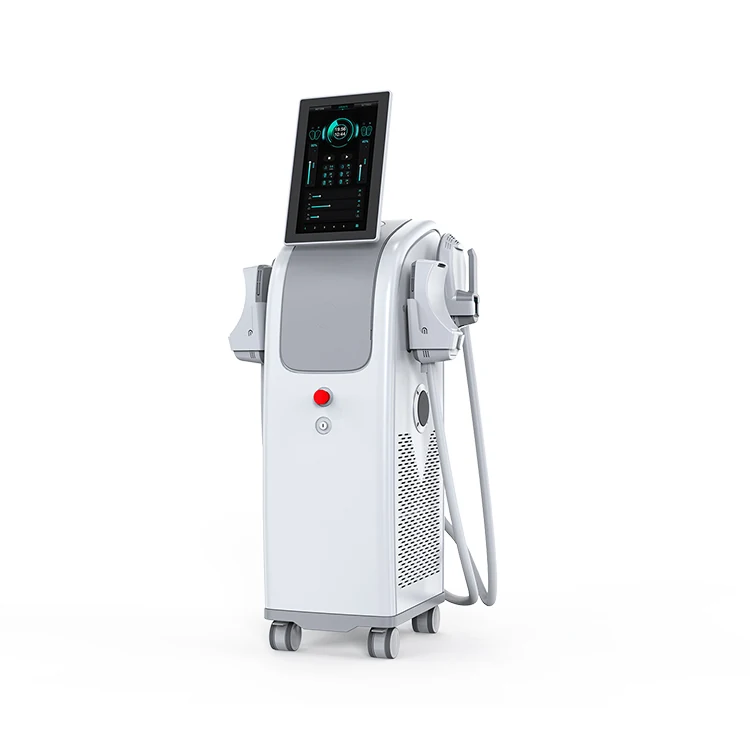
MED-380Neo EMS Body Shaping Machine Manufacturer
MED-380Neo is an EMS body shaping platform with four listed handpieces and two working modes. Review its published equipment values, physical requirements and configuration questions before requesting a quotation for your business or professional facility.
View specifications ↓For distributors and professional procurement.
Share your destination market when you enquire.
Share your destination market when you enquire.
Technical specifications
| Product name | HIFEM Beauty muscle instrument |
|---|---|
| Model NO. | MED-380Neo |
| Handpiece | 4; (2 handpiece I; 2 handpiece II) |
| Energy | 13 Tesla |
| Inductance Value | 30uH |
| Working Mode | 2; Automatic & Professional |
| Output power | 4000VA |
| Frequency | 5-100Hz |
| Voltage | AC 220V/110V±10% 50/60Hz |
| Machine size | 350x460x1190mm |
| Net Weight | 63kg |
Options and order-specific details should be confirmed in the final quotation.
Understand the platform before comparing headline figures
MED-380Neo is the model reference for this EMS body shaping machine. Its product record identifies an electromagnetic equipment platform, four handpieces and two working modes. Those details give a procurement team a starting point for a technical review. They do not establish a treatment result or make the machine equivalent to an exercise program.
If you are assessing this equipment for a facility, explain the role it would have in your equipment plan and identify the people responsible for technical and professional review. If you are evaluating it for distribution, describe the destination market and the documentation your organization needs to assess. Keep those requirements visible from the first inquiry so the quotation is more specific than a model name and price.
The most useful comparison separates the machine's published values from the operational questions still to be answered. Ask what equipment is included, which controls apply to the supplied handpieces and what the current instructions require. A large numerical value on a specification sheet should not replace that review or become an unsupported claim in a distributor's sales material.
Four handpieces with two identifying types
The handpiece entry lists four components: two identified as handpiece I and two as handpiece II. Retain both the count and the type distinction in your request for a quotation. A description that says only four handpieces leaves out the identification needed to compare the proposed package with the published equipment record.
Ask for a current itemized list that identifies each type, its supplied accessories and the documentation explaining its use. If your purchase depends on a particular arrangement or capability, describe that requirement and request confirmation. The handpiece count alone does not establish simultaneous operation, interchangeability or the ability to transfer a component to another unit. Those are configuration questions to resolve directly.
Consider how the components will be recorded after delivery. Ask whether identifying references are available for replacement inquiries and which parts should be listed separately in your equipment register. Request handling, cleaning and storage instructions applicable to the supplied package. Keeping those records organized is a practical part of procurement; it should not require your team to infer compatibility or care procedures from a promotional photograph.
For an equipment acceptance checklist, ask how your receiving team should identify type I and type II handpieces and compare them with the agreed supply list. Request the documentation reference for any connection, preparation or inspection steps rather than writing your own procedure from a photograph. If the order includes multiple machines, clarify how components and records should be associated with each unit. These are useful procurement questions even before an operator begins training, because they establish a clear record of what was ordered, what was delivered and which configuration later technical correspondence concerns.
Automatic and Professional working modes
The published working-mode entry lists two modes, named Automatic and Professional. These names identify controls or operating modes on the equipment. They do not establish that one mode removes the need for operator training, professional judgment or adherence to the instructions. Request an explanation of how the modes are presented on the actual configuration you are considering.
A buyer reviewing a demonstration can ask which settings are available in each mode, how the machine identifies the selected mode and what information is displayed before operation. Ask for the current operating documents rather than relying on a brief demonstration to explain every limit or condition. If interface language matters to your organization, include it as a requirement to confirm for the quoted unit.
For a distributor, distinguish interface descriptions from clinical claims when preparing customer materials. The word Automatic should not become a promise that the machine can be used without qualified oversight. The word Professional should not be treated as a certification of the operator. Keep the terminology tied to the equipment record and direct application-specific questions to the relevant professional assessment and approved documentation.
Magnetic, frequency and electrical entries
The published record contains a 13 Tesla entry under its Energy label and an inductance value of 30µH. It also lists a frequency range of 5–100Hz. These are separate equipment entries. They should not be combined into a claim about the amount of exercise replaced, the amount of muscle gained or a guaranteed change in body composition.
If a specific measurement is important to your engineering review, ask how it is defined, under which conditions it is stated and how it relates to the offered configuration. Preserve the units and labels in your comparison rather than substituting a more familiar term. A specification becomes useful when your team understands what it describes and which information still needs clarification.
The output-power entry is listed as 4000VA. Keep the unit as VA; do not silently rewrite it as watts or use it as a clinical output measure. Ask for the current electrical and installation requirements needed by the person assessing your site. This is particularly important when comparing equipment records that use different labels, because similarly sized numbers may describe different properties of the machines.
Plan the physical installation and receiving route
The machine size is listed as 350 × 460 × 1190mm, and the net weight is 63kg. Use those figures for an initial placement review, then ask for the operating clearances and accessory-handling space required for the actual installation. The cabinet footprint alone does not tell you how the full working area should be arranged.
Check the delivery route before arranging transport. If the equipment must pass through narrow doors, use a lift or move between floors, include those constraints in the logistics discussion. Request packed dimensions and gross weight separately from net machine figures. Confirm who will unload, unpack and position the unit, and ask whether any of those activities are included in the commercial offer.
The voltage entry lists AC 220V or 110V, with ±10% and 50/60Hz. Have the electrical version of the ordered machine confirmed and ask for the installation documents relevant to it. Site suitability should be assessed by qualified personnel using the actual requirements. A general voltage range on a webpage is not an instruction to connect the machine to any available outlet without further checks.
Compare the package and define an OEM brief
For MED-380Neo, a useful comparison sheet should show the handpiece types, working modes, electrical configuration and included items separately. Add the specific documentation questions your team needs answered. If a quotation leaves one of those fields unclear, request a revised description before comparing its price with another offer. The aim is to compare equipment packages with a known scope.
If your interest includes private-label supply, describe the proposed branding and customer-facing materials after you have identified the technical package. Ask whether the requested changes can be evaluated for this platform, how artwork and language requirements would be approved and whether they affect the order quantity or schedule. Do not assume a change is available simply because it is part of your preferred launch plan.
Discuss how the accepted configuration will be recorded for future reference. Your purchase documents should make it possible to identify the machine and supplied handpiece types without referring back to an informal message. Where your team creates its own catalog entry, maintain the same distinction between equipment specifications and unverified outcomes. The platform should be promoted on the configuration being offered, not on invented exercise-equivalence claims.
Clarify documents and support before ordering
Request the model-specific records relevant to your destination and intended professional setting. Have the applicable requirements assessed where necessary. Neither the EMS category name nor the published numerical values establish regulatory approval for all markets. Your inquiry should identify the exact model, configuration and documentation question so the response can be evaluated against the purchase you are considering.
Ask about available training and handover arrangements, including language, format and responsibility for site preparation. Request the warranty scope for the machine and handpieces, the procedure for a technical inquiry and the terms for replacement components. Confirm any costs or limitations connected with transportation, on-site work or remote assistance. This product page does not promise a universal service period or response time.
To begin, send your destination country, anticipated quantity and purchasing role with MED-380Neo in the inquiry. Include any required handpiece arrangement, interface question or private-label proposal. Ask for the final offer to distinguish the equipment package from shipping and support arrangements. That gives your team a concrete basis for approval while leaving clinical suitability and operating decisions to the appropriate qualified professionals.
Before you enquire
Questions, answered.
How many handpieces are listed for MED-380Neo?
The record lists four handpieces, consisting of two type I and two type II components. Request a current itemized list and confirm the accessories supplied with each. The count alone does not establish simultaneous operation or compatibility with another model.
What are the names of the working modes?
The two published names are Automatic and Professional. Ask for the current instructions explaining those modes and the available controls. Neither name replaces training, professional requirements or the need to follow the machine documentation.
Does the 13 Tesla entry prove a treatment result?
No. It is a published equipment entry, not evidence of an individual outcome. Do not convert it into a claim about exercise equivalence, muscle gain or body composition. Request clarification of the specification if it is important to your technical review.
Is the 4000VA entry the same as 4000W?
The source expresses the entry in VA, and it is retained in that unit. Ask for the electrical information required by your site assessor rather than changing the unit or inferring operating requirements from an unsupported conversion.
What should a distributor request before approving this model?
Request the exact equipment configuration, the relevant model-specific documents and the commercial terms for your destination. Identify training, support, replacement-component and branding questions separately so the final offer provides a reviewable scope for your business.
Keep exploring
Explore category →In the same collection.
Your next equipment project
Let’s build your shortlist.
Tell us your market, preferred model and configuration questions.