Product presentation · Confirm configuration with your quotation
KES / Body contouring
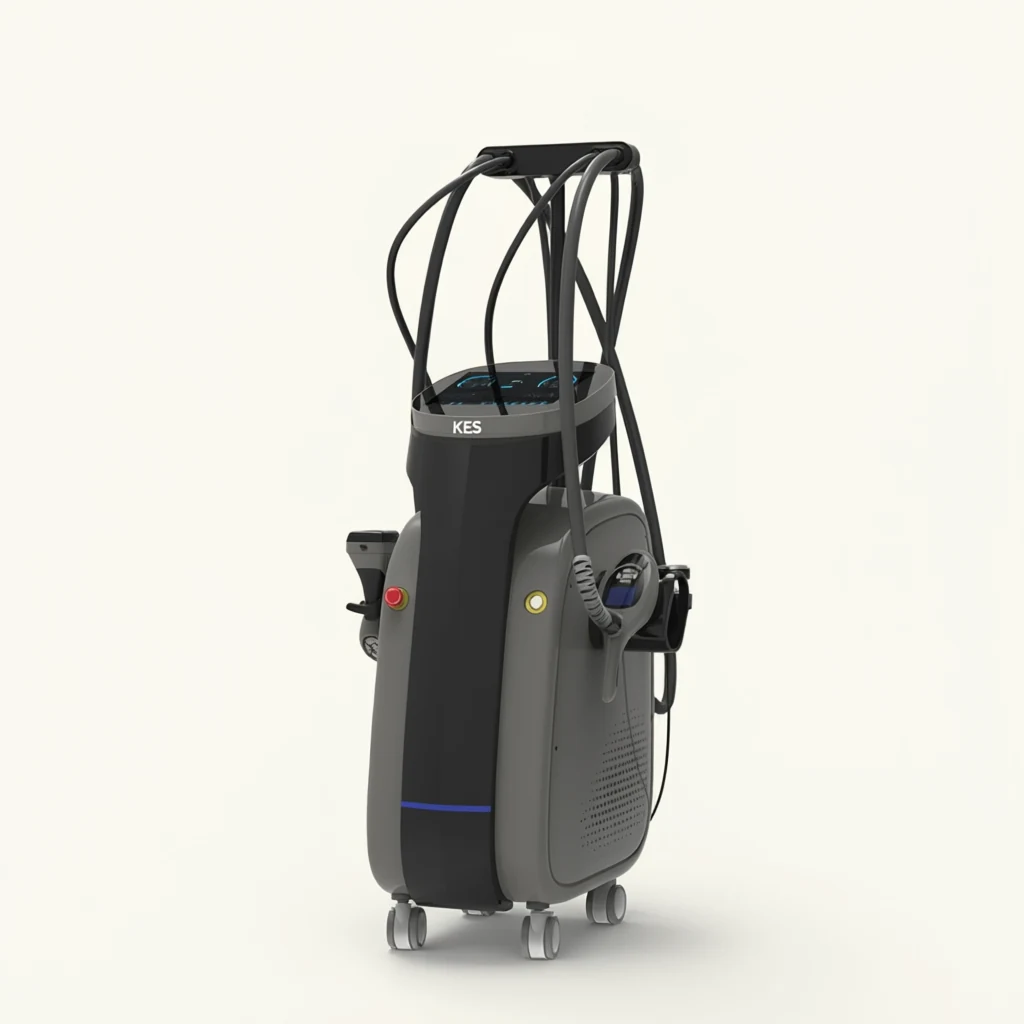
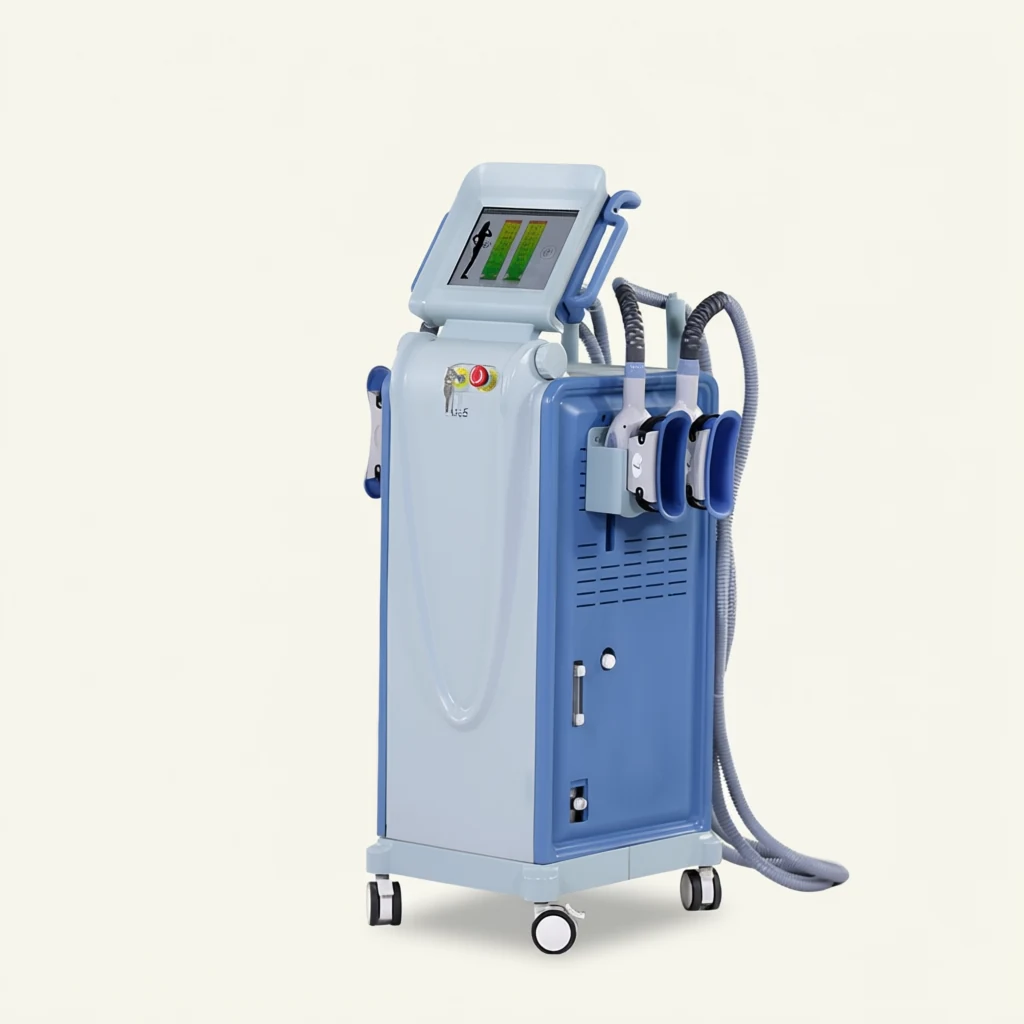
MED-SLIM8 Cryolipolysis Machine Manufacturer
MED-SLIM8 is a cryolipolysis body contouring platform with published cooling, vacuum and electrical specifications. Review the machine record, plan the configuration questions that matter to your purchase, and request an offer for your destination and quantity.
View specifications ↓For distributors and professional procurement.
Share your destination market when you enquire.
Share your destination market when you enquire.
Technical specifications
| Power | 1200W |
|---|---|
| Cooling Grade | -10℃~0℃ |
| Focused Technology | Cryotherapy+Vacuum+LED |
| Delivery Type | Pulse/CW |
| Pump Suction Rate | 0-60 level adjustable |
| Blue light | up to 2W |
| Cooling | Continuous contact cooling (-10℃-0℃) |
| Stand-by Working | Continuous for 18 hours |
| Voltage | AC 220V±10% 50HZ AC 110V±10% 60HZ |
| Dimensions(W*D*H) | 48*42*105cm |
| Net weight | 68kg |
Options and order-specific details should be confirmed in the final quotation.
A cryolipolysis platform with a defined equipment identity
MED-SLIM8 is the model to identify when discussing this KES cryolipolysis body contouring machine. Its technology entry lists cryotherapy, vacuum and LED. For a procurement team, that description establishes the platform being considered; it does not establish how a particular person should be treated or what result an individual will experience. Keep the equipment discussion separate from clinical decisions.
A useful shortlist starts with your purchasing purpose. Are you evaluating one unit for a professional facility, replacing an existing machine or considering a product for distribution? State that context alongside the model name. The information needed to compare equipment may differ, particularly where the purchase involves multiple destinations or a proposed private-label arrangement.
This page brings the published machine details together with questions to resolve before ordering. It deliberately keeps a numerical specification attached to its label. Cooling range, power and vacuum adjustment are different equipment properties. They should not be combined into a claim about effectiveness, speed or safety. Use the figures to structure a technical inquiry and request the current documentation for the configuration that will actually be offered.
Read the cooling range as a machine specification
The cooling-grade entry lists a range of minus 10°C to 0°C. The cooling description also identifies continuous contact cooling within that range. These are published equipment entries. They should not be described as a measured tissue temperature, an operating recommendation for an individual or proof that a particular outcome is assured.
For your technical review, ask how temperature is displayed and monitored on the offered unit, which conditions apply to the published range and what the operating instructions require before use. If your organization needs particular monitoring or documentation features, put those requirements in the inquiry and request confirmation. Do not assume a feature exists because another cryolipolysis platform uses it.
Cooling specifications also belong in the maintenance discussion. Ask what checks, preparation and maintenance the manufacturer specifies, which items the operator may handle and when qualified technical assistance is required. Request the relevant instructions rather than improvising a procedure from a sales description. Your equipment records should retain the applicable version so the people responsible for the machine have a consistent reference after delivery.
Vacuum adjustment, delivery type and light entry
The vacuum-related entry is expressed as an adjustment scale from 0 to 60 levels. It is not presented here as a pressure measurement in kPa. If your comparison requires an absolute pressure specification, request that information for the offered configuration. Do not convert an adjustment level into a pressure value or assume it matches the scale on another machine.
The delivery-type entry lists Pulse and CW, while the blue-light entry lists up to 2W. Keep those entries in their own columns when reviewing equipment. Ask what the labels mean on the current interface and how they relate to the supplied components. A specification label does not provide a complete description of control behavior, operating limits or the sequence required for use.
This is also the stage to define the applicator package. Ask for an itemized list, the identifying references for each supplied applicator and the current dimensions relevant to your proposed order. Do not infer the exact package from a promotional photograph. If you require a particular applicator arrangement, describe it as a requirement and ask for a confirmed configuration before comparing prices.
If several people are evaluating the applicators, collect their requirements into one list before requesting an updated offer. A commercial buyer may focus on the included count while a technical reviewer needs identification, dimensions and operating documentation. Have both sets of questions attached to the same configuration. Ask for any proposed substitution to be described explicitly rather than accepted under a generic applicator label. That gives your organization a more reliable acceptance reference and helps keep subsequent support inquiries tied to the equipment actually ordered, without assuming that a pictured attachment defines the complete supply scope.
Give room planning and movement enough attention
The listed machine size is 48 × 42 × 105cm, in width, depth and height. Net weight is listed as 68kg. Those figures help you start an access and placement assessment. Ask for the complete installation requirements before deciding that the equipment will fit a particular room, since the cabinet dimensions do not establish all operating clearances or accessory space.
Think through the route from delivery to the intended location. Does it involve stairs, a lift, restricted door access or a transfer across different surfaces? Provide relevant details when discussing logistics and ask for packed dimensions and gross weight. Confirm the scope of unloading, unpacking and positioning rather than assuming that a transport quotation includes those activities.
The listed power entry is 1200W. The voltage specification identifies AC 220V ±10% at 50Hz and AC 110V ±10% at 60Hz. Confirm the configuration of the ordered unit and ask for the installation documents needed to assess your site. A qualified person should determine whether the proposed electrical supply meets the actual requirements; the website is not a wiring or installation instruction.
Build a realistic equipment-cost comparison
Compare MED-SLIM8 quotations using the same package description. Start with the machine and applicators, then identify the included accessories, documentation and any items that must be purchased separately. Ask whether consumables or maintenance materials are required and how those items are specified. Their availability and ordering terms should be discussed rather than assumed from the base price.
Keep logistics costs visible as well. Ask what the proposed shipping scope includes and which charges or responsibilities remain with the buyer. If your organization needs insurance, customs support or a particular delivery arrangement, state that requirement and request its inclusion or exclusion in writing. This makes the offers easier to compare without confusing the equipment price with the total purchasing budget.
The standby-working entry says continuous for eighteen hours. That entry is not a forecast of appointments per day, treatment duration or commercial return. Ask for the operating conditions behind the specification and plan your business independently of unverified throughput claims. A sound equipment comparison should rely on the proposed configuration and commercial terms, not on an assumed number of treatments derived from a standby figure.
Prepare a distributor or OEM discussion around the machine
A distributor brief can describe the customer segment, destination markets and equipment category you intend to serve. Explain why MED-SLIM8 is under consideration and which information your technical or commercial team still needs. Request a model-specific documentation list and identify the local requirements your organization must evaluate. Equipment naming alone does not establish market authorization.
If you want to discuss branding or other customization, keep the underlying configuration fixed while the request is evaluated. Describe the exterior identity, packaging, language or accompanying-material changes you would like considered, then ask which are feasible for the proposed order. Quantity requirements, approval steps, costs and timing should be confirmed rather than inferred from the availability of a general OEM inquiry route.
Before approving any project, ask how the accepted configuration will be recorded. The equipment schedule should identify the model, applicators, electrical version and any agreed changes. Request a clear process for reviewing revisions so the product description, artwork and quotation do not drift apart. Your team should be able to point to one agreed package when preparing an order or answering a downstream customer's configuration question.
Documentation and handover before the purchase commitment
Ask which operating instructions and model-specific documents can be reviewed before purchase, and in what language. If your destination requires particular records, identify them explicitly and obtain qualified advice on their applicability. A website listing is not a substitute for the documents needed to assess the exact product and intended professional setting.
Discuss the handover arrangements for your location. Ask whether installation, remote guidance or operator training can be included, what their scope would be and who is responsible for preparing the site. Request the warranty offered for the machine and its components, including exclusions, the claims procedure and any transport or technical-work responsibilities. Do not assume a universal response time or international on-site service.
To request a MED-SLIM8 quotation, send your country, expected quantity, applicator requirements and purchasing role. Add any site constraints or documentation questions that could affect the offer. The next step should be a reviewable equipment package with identified conditions, giving your team a practical basis for a purchase decision without relying on promises of weight loss or a guaranteed body-contouring result.
Before you enquire
Questions, answered.
Does the cooling range describe a tissue temperature?
No. Minus 10°C to 0°C is presented as the published equipment cooling range. It should not be treated as a tissue measurement, a recommended setting or a guarantee of safety or results. Request the current instructions for the proposed configuration.
Is the vacuum entry a pressure specification?
The published entry describes an adjustable scale of 0 to 60 levels. It is not converted here to a pressure value. If an absolute pressure specification is important to your technical review, ask for it directly and confirm the measurement conditions.
How do I confirm the supplied applicators?
Request an itemized configuration identifying each applicator and the relevant dimensions for the offered package. Put any essential applicator requirement in your inquiry, and check that it appears in the final quotation instead of relying on photographs alone.
Can I plan shipping from the stated weight?
The listed 68kg is net machine weight. Request gross weight and packed dimensions for shipping, and clarify whether the logistics offer includes unloading or positioning. The machine dimensions do not describe the full packed consignment.
What does the website promise about body-contouring results?
It does not promise a specific result, weight loss or a fixed treatment outcome. The page supports equipment purchasing. Suitability and lawful professional operation require the appropriate assessment, current operating documents and consideration of the requirements in the destination market.
Keep exploring
Explore category →In the same collection.
Your next equipment project
Let’s build your shortlist.
Tell us your market, preferred model and configuration questions.